Introduction
Living with a wound that refuses to heal is more than just a medical inconvenience; it is a persistent challenge that affects every aspect of daily life. For millions of people, chronic wounds, those that fail to progress through the normal stages of healing within thirty days, can lead to pain, restricted mobility, and serious long-term health risks.
While traditional wound care, like bandages and ointments are essential, it sometimes isn't enough. This is where oxygen therapy for chronic wounds steps in. By harnessing the power of one of the most basic elements of life, modern medicine has found a way to "supercharge" the body’s internal repair system.
1. What Is Oxygen Therapy for Chronic Wounds?
At its core, oxygen therapy is exactly what it sounds like: a medical treatment that provides a patient with extra oxygen. However, for chronic wounds, we aren't just talking about a simple nasal tube. The gold standard for this treatment is mild Hyperbaric Oxygen Therapy (mHBOT).
In a standard environment, we breathe air that is about 21% oxygen. While this is plenty for a healthy body, a chronic wound is often "starved" for air. Tissues damaged by diabetes, poor circulation, or radiation often suffer from hypoxia, a state where oxygen levels are too low to support cell repair.
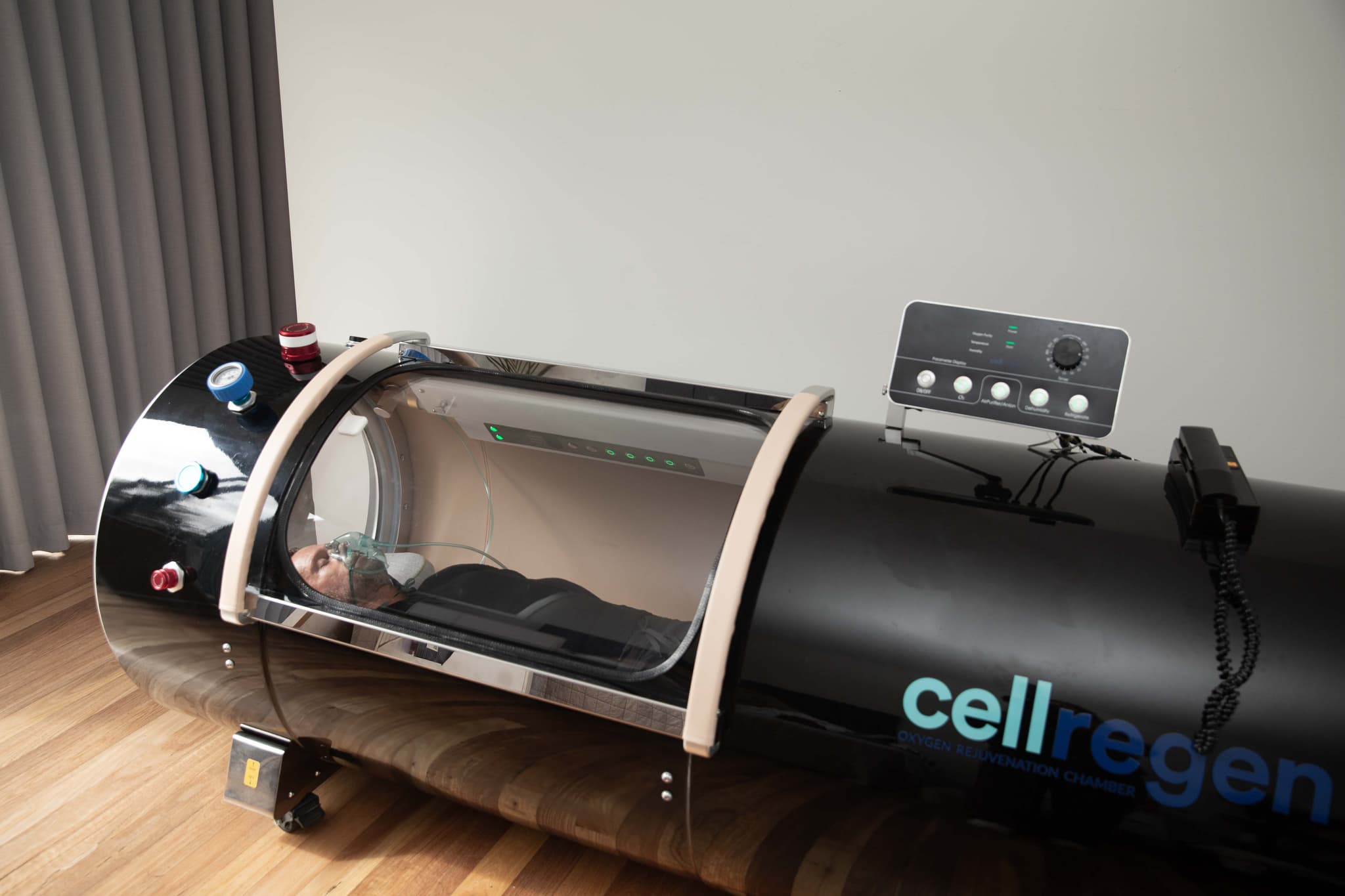
During mHBOT, a patient enters a hyperbaric oxygen chamber, where the atmospheric pressure is increased to two or three times higher than normal. In this pressurised environment, the patient breathes 90-95% oxygen. This combination of high pressure and high purity allows oxygen to dissolve not just into the red blood cells, but directly into the blood plasma, reaching deep into tissues where circulation is restricted.
2. How Oxygen Therapy Supports Wound Healing
To understand why this works, we have to look at what happens under the skin. Healing a wound is an energy-intensive process for the body, and oxygen is the fuel that powers it.
Stimulating New Tissue Growth
Think of oxygen as the foreman on a construction site. Without it, the "workers" (cells) can’t do their jobs. Oxygen therapy triggers the release of substances called growth factors. These signal the body to start repairing damaged skin and muscle, filling in the gap left by the wound.
Enhancing Collagen Production
Collagen is the "glue" of the human body. It provides the structural framework for new skin. Studies show that the enzymes responsible for knitting collagen fibers together are highly oxygen-dependent. By increasing oxygen levels, the body can build a stronger, more resilient "scaffold" for the wound to close.
Improving Blood Circulation
One of the most remarkable mild hyperbaric oxygen therapy benefits is its ability to encourage "angiogenesis." This is the medical term for the growth of new blood vessels. Chronic wounds often exist because the original blood vessels in the area are damaged. Oxygen therapy encourages the body to grow a new network of microscopic pipes to deliver nutrients to the site long after the treatment session ends.
Supporting the Immune Response
Infection is the greatest enemy of a chronic wound. Many bacteria that thrive in wounds are "anaerobic," meaning they hate oxygen. High doses of oxygen can be lethal to these bacteria. Furthermore, our white blood cells (the body’s internal police force) require oxygen to produce the "oxidative burst" needed to kill invading germs.
3. The Role of a Hyperbaric Oxygen Chamber
The mild hyperbaric oxygen chamber is the engine that makes this healing possible. It is a specialized, pressurized vessel designed for safety and comfort. But how does the physics of a chamber actually translate to healing?
Henry’s Law: This scientific principle states that more gas will dissolve into a liquid when under pressure. By increasing the pressure inside the chamber, the oxygen is forced into your blood plasma.
Deep Penetration: Even if a patient has a blocked artery, the oxygen-rich plasma can often seep through the tissues like water soaking into a sponge, reaching the wound even when red blood cells cannot.
Systemic Reduction of Swelling: The pressure inside the chamber helps reduce edema (swelling). When swelling goes down, blood flow naturally improves, creating a "virtuous cycle" of healing.
4. Conditions That Benefit from Oxygen Therapy
Oxygen therapy isn't a one-size-fits-all miracle, but for specific conditions, it is life-changing.
Diabetic Foot Ulcers
Diabetes can damage small blood vessels and nerves in the feet. A small scratch can quickly turn into a deep ulcer. mHBOT is frequently used to prevent these ulcers from worsening, significantly reducing the risk of amputation.
Pressure Sores
Common in patients with limited mobility, pressure sores (or bedsores) occur when blood flow is cut off from an area of the body. Oxygen therapy helps revive these oxygen-starved areas.
Radiation Injuries
Cancer treatments like radiation can sometimes damage healthy tissue surrounding a tumor. This damage might not appear until years later. Oxygen therapy is one of the few treatments capable of stimulating healing in radiation-damaged bone and soft tissue.
Non-Healing Surgical Wounds
Sometimes, despite a surgeon's best efforts, an incision fails to close. This is common in areas with low blood supply or in patients with underlying health issues. A "boost" of oxygen can often jumpstart a stalled recovery.
5. What to Expect During Oxygen Therapy
For many, the idea of a "chamber" sounds intimidating, but the process is quite straightforward.
Preparation: Patients usually change into 100% cotton clothing to prevent static. Items like jewelry, watches, and battery-operated devices are left outside for safety.
Compression: As the session begins, you will hear the sound of air entering the chamber. You might feel a "fullness" in your ears, similar to when a plane takes off or lands. Yawning or swallowing easily clears this.
Treatment: Once at the correct pressure, you simply relax. Many chambers are transparent, and most modern clinics provide televisions or music. You breathe normally while the oxygen does the work.
Decompression: At the end of the session, the pressure is slowly lowered.
A typical session lasts between 60 to 90 minutes. Depending on the severity of the wound, a patient might need 20 to 40 sessions, often scheduled once daily.
6. Safety and Effectiveness
Is it safe? Yes. Oxygen therapy is a well-established medical treatment. Like any procedure, it has potential side effects, such as temporary vision changes or ear discomfort, but these are rare and usually resolve quickly.
Clinically, the evidence is strong. Research consistently shows that patients who incorporate mHBOT into their wound care plan have higher closure rates and fewer complications than those using standard care alone. It is a team effort: the oxygen works alongside nutrition, proper cleaning, and off-loading (keeping weight off the wound).
7. Conclusion
Chronic wounds are a heavy burden, but you don't have to wait for them to heal on their own. Oxygen therapy for chronic wounds provides a scientifically proven way to give your body the resources it needs to repair itself. Whether it’s through the growth of new blood vessels, the destruction of harmful bacteria, or the strengthening of skin tissue, the benefits of this treatment are profound.
By utilising a mild hyperbaric chamber, you can turn the tide against non-healing injuries. If you are looking for advanced recovery options, searching for a mild hyperbaric chamber in Australia can connect you with a Cellregen specialist to restore health and mobility. Oxygen is more than just something we breathe; it is a vital tool for recovery.
Frequently Asked Questions
1. How does oxygen therapy help chronic wounds heal?
It works by flooding the blood plasma with high concentrations of oxygen. This helps kill bacteria, reduces swelling, and triggers the body to grow new blood vessels and skin tissue, especially in areas where circulation is poor.
2. What are the benefits of hyperbaric oxygen therapy?
The primary hyperbaric oxygen therapy benefits include faster healing times, a lower risk of infection, reduced inflammation, and the prevention of permanent tissue loss or amputation in severe cases like diabetic ulcers.
3. What is a hyperbaric oxygen chamber used for?
A mild hyperbaric oxygen chamber is used to create a high-pressure environment that allows the body to absorb much more oxygen than is possible at normal sea-level pressure. It is used for treating wounds, decompression sickness, carbon monoxide poisoning, and radiation injuries.
4. Is oxygen therapy safe for chronic wound treatment?
Yes, it is very safe.
5. How many sessions are needed for effective results?
The number of sessions varies depending on the wound type and the patient's health. While some may see improvement in 10 sessions, complex chronic wounds often require 20 to 40 sessions to achieve full healing.