A Practical Look at Oxygen, Recovery, and Everyday Wellness
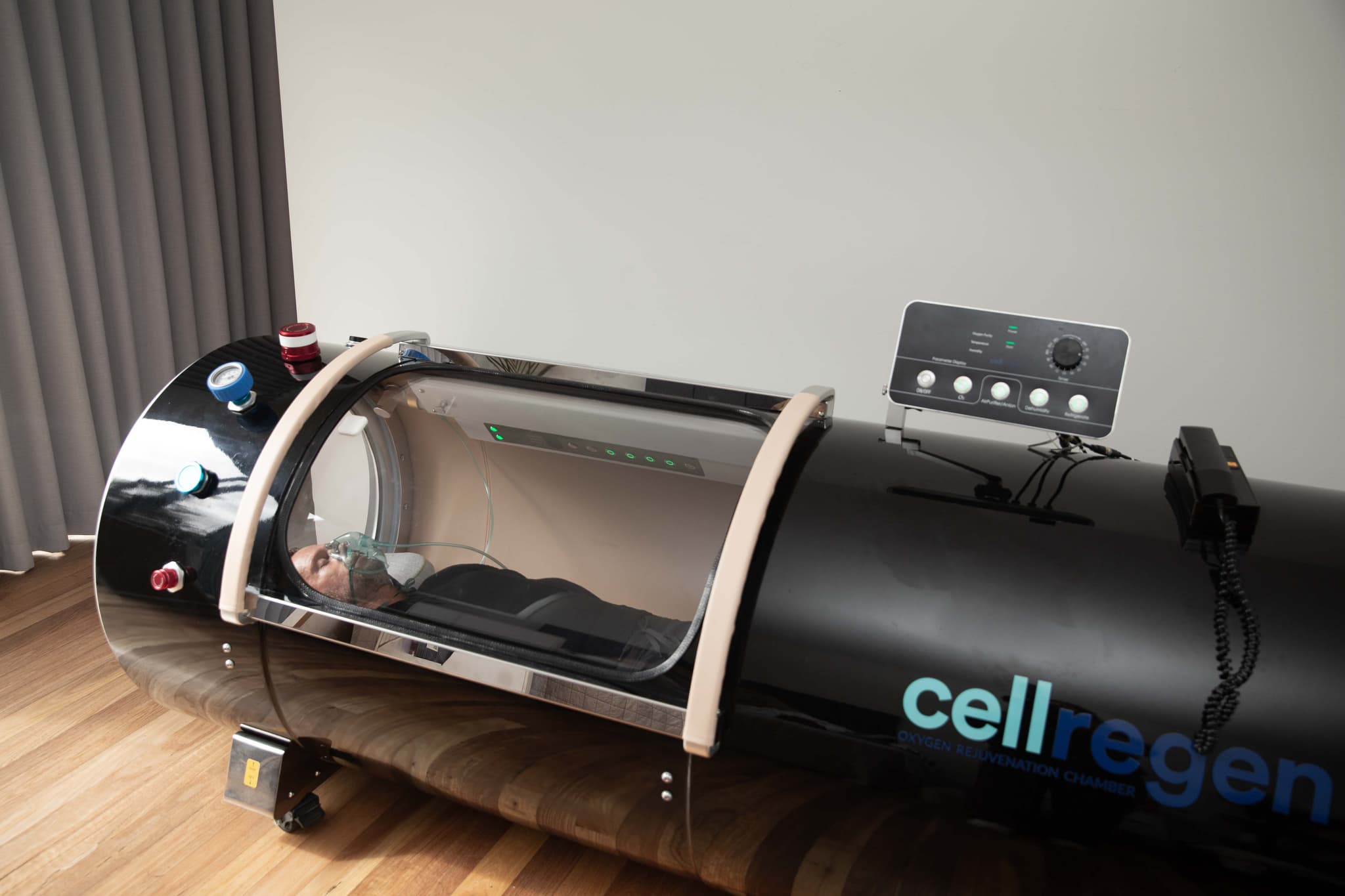
At Cellregen, we work with families, clinics, and wellness spaces across Australia to integrate mild hyperbaric oxygen therapy (mHBOT) into everyday routines.
While hyperbaric oxygen therapy has long been used in medical settings, more people are now exploring gentler, more accessible options to support recovery, energy, and long-term wellbeing.
So what actually happens inside your body during a session — and why does pressurised oxygen make a difference?
Understanding the Basics of Hyperbaric Oxygen Therapy
At sea level, the air we breathe contains around 21% oxygen. This oxygen is carried through the body by red blood cells and used to support essential functions like energy production, repair, and immune response.
Hyperbaric oxygen therapy changes this process by increasing pressure.
Inside a hyperbaric chamber, pressure is gently elevated while you breathe oxygen. This allows more oxygen to dissolve directly into the body’s fluids — not just the red blood cells.
This process is based on a simple scientific principle: when pressure increases, gases dissolve more easily into liquids. As a result, oxygen can reach areas of the body where circulation may be limited.
What Makes Mild HBOT Different?
Clinical hyperbaric therapy is typically delivered in hospital settings at higher pressures and is used for specific medical conditions.
Mild hyperbaric oxygen therapy (mHBOT), on the other hand:
Operates at lower, more accessible pressure levels
Is designed for consistent, repeated use
Can be integrated into home or wellness routines
Focuses on supporting the body’s natural processes, rather than treating acute conditions
This makes mHBOT a practical option for people looking to take a more proactive, long-term approach to their health.
Oxygen and the Body at a Cellular Level
Every cell in your body relies on oxygen to produce energy in the form of ATP (adenosine triphosphate). This energy powers everything from brain function to muscle repair.
When oxygen availability is reduced, the body’s ability to repair and maintain itself can be impacted.
By increasing oxygen availability, mHBOT may support processes such as:
Cellular energy production
Tissue repair and recovery
Circulation and oxygen delivery
General physiological balance
Research continues to explore how oxygen availability influences these processes, particularly in the context of recovery and performance.
Where mHBOT Fits in a Wellness Routine
While clinical HBOT is used for specific medical indications, mild HBOT is increasingly being used as part of a broader wellness and recovery approach.
People commonly explore mHBOT for:
Supporting recovery from training or physical strain
Maintaining energy and mental clarity
Complementing other wellness practices
Creating structured time for rest and recovery
At Cellregen, we often see clients integrate sessions into their weekly routine — similar to how you might approach exercise, sauna use, or other recovery tools.
Supporting the Body’s Natural Processes
Oxygen plays a role in many of the body’s internal systems, including those involved in repair, circulation, and metabolic function.
Some areas of ongoing research include:
Collagen production and tissue support
Formation of new blood vessels (angiogenesis)
Mitochondrial function (energy production)
The body’s response to oxidative stress
While research is still evolving, the key concept is simple: oxygen is foundational to how the body functions and repairs itself.
Safety and Considerations
When used appropriately, mild hyperbaric oxygen therapy is considered a low-risk wellness modality.
However, it’s important to:
Seek guidance if you have existing health conditions
Use equipment that meets safety standards
Follow structured protocols rather than guessing usage
Some people may experience mild pressure-related sensations (similar to flying), which can be managed with proper guidance.
Why More Australians Are Exploring mHBOT at Home
Access to hyperbaric therapy is expanding across Australia, with more people looking for consistent, convenient options that fit into daily life.
At Cellregen, we’ve supported over 120 installations across homes, clinics, and wellness spaces.
Our approach focuses on:
Education and clarity before purchase
Safe, realistic usage guidance
Helping clients integrate mHBOT into long-term routines
Because ultimately, results don’t come from a single session — they come from consistent use over time.
Getting Started with Mild Hyperbaric Oxygen Therapy
If you’re considering mHBOT, a good starting point is understanding:
What your goals are (recovery, energy, general wellness)
How often you would realistically use a chamber
What type of setup suits your home or space
Having the right guidance early on makes a significant difference in both safety and long-term value.
Is mHBOT Right for You?
Mild hyperbaric oxygen therapy isn’t about quick fixes — it’s about supporting your body over time.
For many people, it becomes part of a broader approach that includes movement, nutrition, and recovery.
If you’ve been curious about oxygen therapy, longevity, or supporting your body at a deeper level, mHBOT is an area worth exploring.
Speak With the Cellregen Team
If you’d like to understand how mild hyperbaric oxygen therapy could fit into your routine, the team at Cellregen can guide you through your options.
Whether you're exploring for personal use or a clinic space, we’ll help you:
Understand how it works
Set realistic expectations
Choose the right setup for your needs
Start the conversation and see what’s possible with mHBOT.